Species & sizes
Stock changes constantly — it depends on what came in last month. Call before you drive out, and if what you want isn't on the ground I can usually cut it from log stock within the week.
| Species | Typically used for | Notes |
|---|---|---|
| Eastern Red Cedar | Fence, posts, run-in sheds, pergolas, closet lining, outdoor furniture | Naturally rot resistant. Deep purple heartwood against cream sapwood. Wide clear boards are scarce because the trees run small — expect to pay for width and length. |
| White Oak | Timbers, beams, barn repair, outdoor structures, flooring | Closed grain and rot resistant. The large timbers most yards can't supply. |
| Red Oak | Dimensional stock, benches, furniture, interior trim | Open grain, strong, takes stain well. Not for ground contact. |
| Black Walnut | Slabs, tabletops, mantels, project boards | Available as live edge slabs and surfaced project stock. |
| Cherry | Furniture, cabinetry, project boards | Darkens handsomely with age and light. |
| Ash | Furniture, benches, tool handles, slabs | Often spalted. I mill every fallen ash I can get to — emerald ash borer has made standing ash a vanishing thing, and burning it is a waste. |
| Maple | Slabs, tabletops, project boards | Figured and spalted pieces turn up regularly. |
| Poplar | Paint-grade trim, shelving, utility lumber, shed framing | Light, stable, inexpensive. Sometimes streaked green and purple. |
| Osage Orange | Turning blanks, fence posts, specialty pieces | Brilliant yellow, extraordinarily rot resistant, hard on blades. |
Capabilities
Send a cut list and I'll work from it. Thicknesses from 3/8" up to a full 8", any width the log will give, lengths to 24 feet. Standard dimensions are cheaper per board foot than unusual ones for the obvious reason — fewer passes and less waste.
Both air dried and kiln dried stock is available, and they are not the same thing.
Ask what a particular stack is sitting at and I'll tell you straight. Nobody is well served by me pretending green wood is ready.
Rough sawn is the default. Planing and jointing are available if you want a finished face, priced by the hour. Most construction buyers take it rough; furniture makers usually don't.
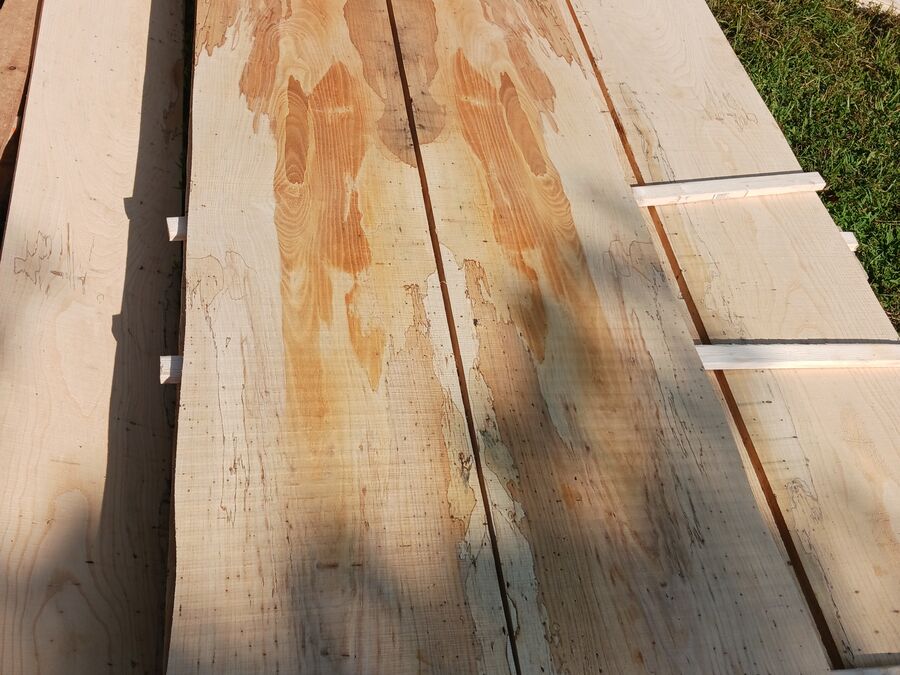
Often spalted. Milled from trees the borer took.
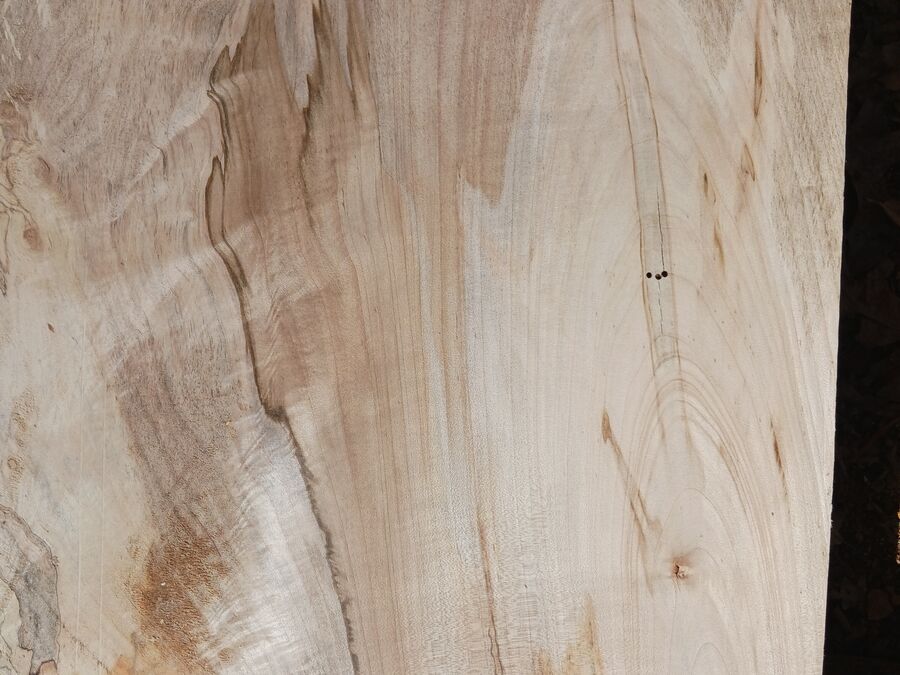
Slabs, often figured or spalted.
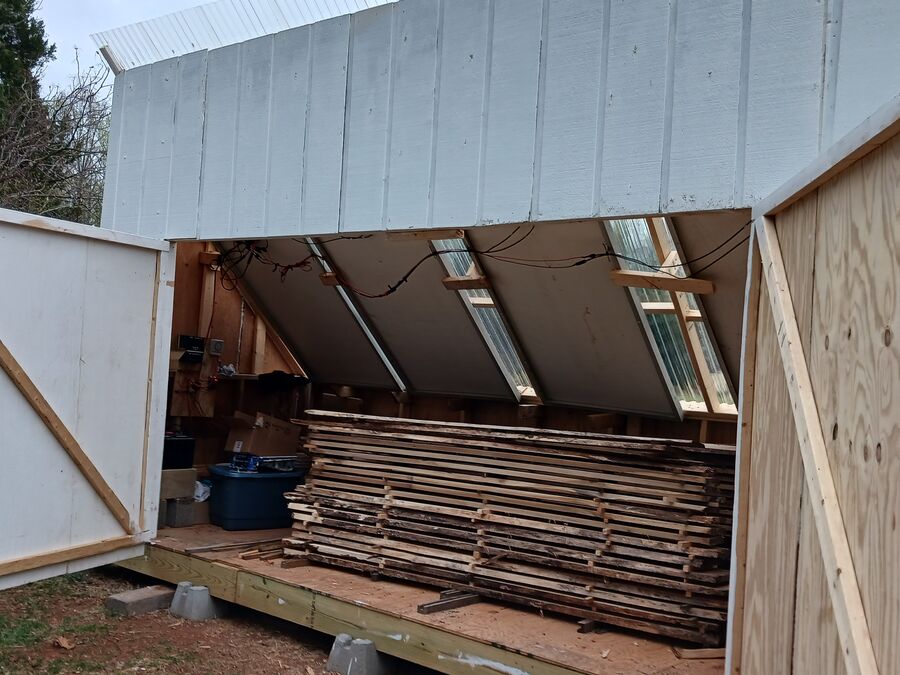
On site, for stock that's going indoors.
Describe the project and I'll tell you which species makes sense and roughly what it costs. That conversation is free and usually saves you money.