
A one-man sawmill in Albemarle County, turning trees nobody wanted into lumber nobody stocks.
The short version
Storm-felled oak. Fencerow cedar. Ash that the borer killed. Walnut a crew was about to chip. It arrives here on a trailer and leaves as boards cut to whatever dimension somebody actually asked for.
That's the whole business. I run a bandmill five miles north of Charlottesville and I cut to order — thicknesses from three-eighths of an inch up to eight inches, widths out to thirty-six inches, lengths to twenty-four feet. If you walked into a big box store and asked for a 2×12 in cedar, sixteen feet long, they would look at you sideways. Here it's a Tuesday.
On the ground
Eastern red cedar is most of what moves out of here, because it rots slower than anything else that grows in this county and people are forever building things that live outdoors. The rest comes and goes with whatever the tree crews drop off.
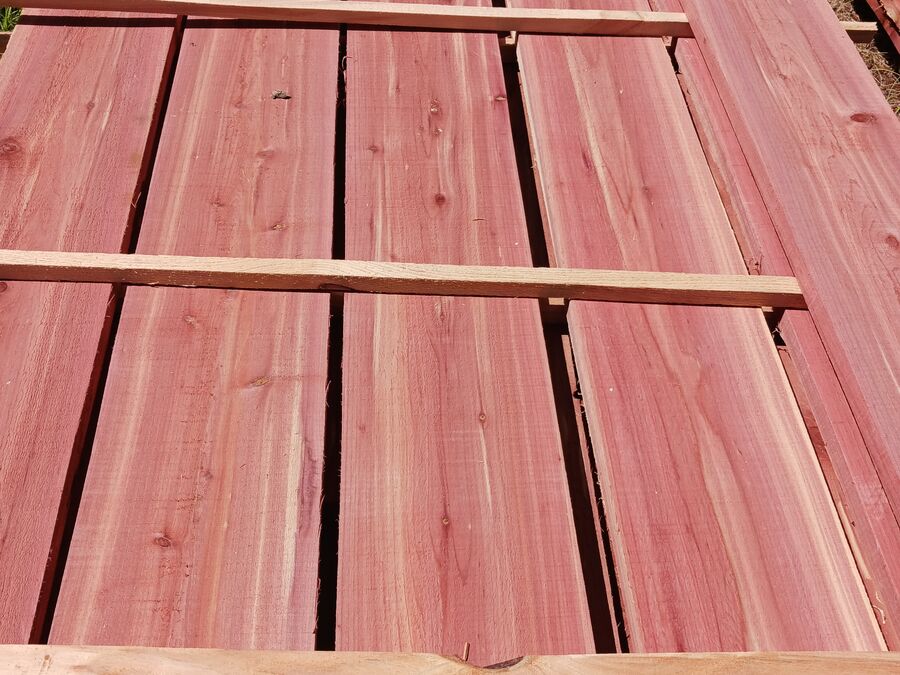
Purple heart against cream sap, and it smells like a hope chest. Fence, posts, sheds, pergolas, closet lining. Wide clear boards are genuinely scarce — the trees just don't grow that big around here.
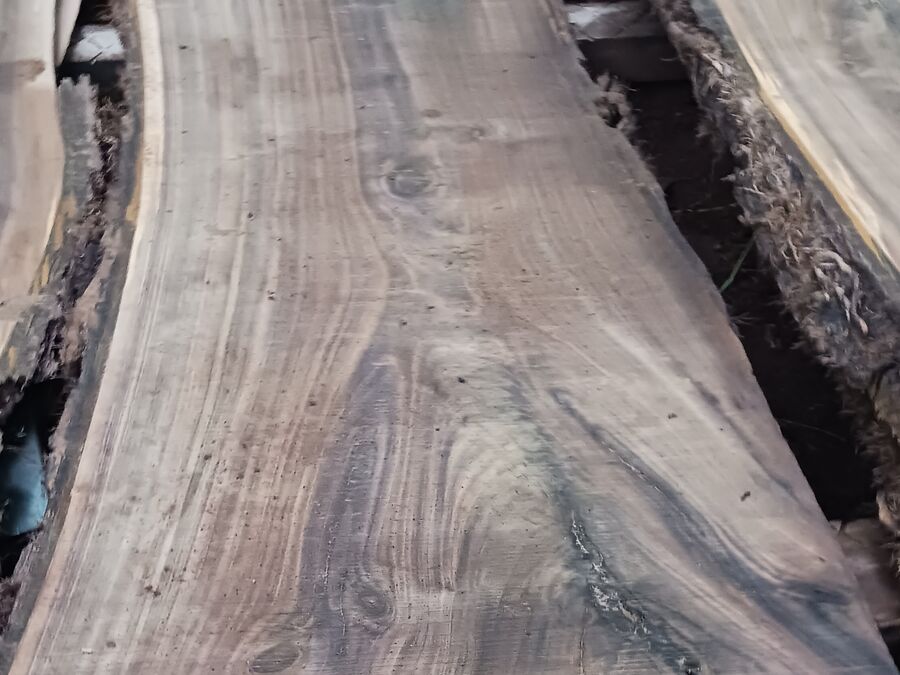
The one people drive out to see rather than buy over the phone, and they're right to. Slabs and surfaced project boards.
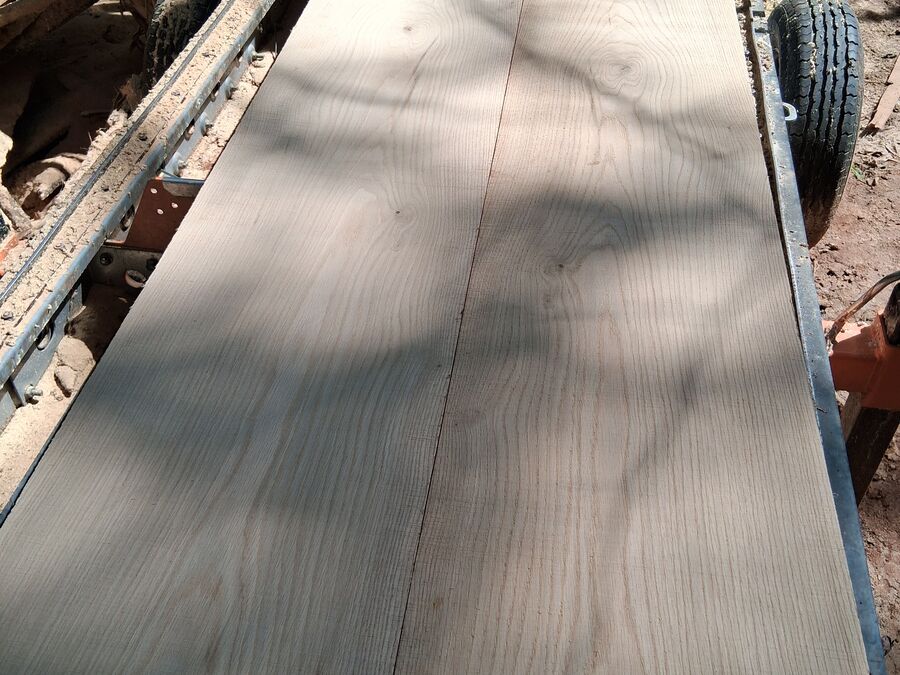
Beams and timbers — the sizes that are hardest to find locally and easiest for this mill to cut. A 10×10 in oak is a phone call, not a special order.
Tree services & excavators
If your crews are running loads to the landfill, drop them here instead. Free, any hour, and nobody has to be standing there to let you in.
Or your own tree
People are often surprised what comes out of a tree they were about to pay someone to haul off. Send a photo and the measurement across the small end of the log and I'll tell you straight whether there's anything in there worth milling.
Dimensions, quantity, and when you need it — two minutes on the phone settles what a week of email won't.
Eric Henley · usually covered in sawdust, always picks up eventually